
One record. From point of injury to definitive care.
AHS-UA1 collapses the paper TCCC casualty card into a phone-based digital record that travels with the patient through every evacuation link. No re-entry. No paper handoff. No identity loss. Data fields map to TCCC; output is structured for handoff to NATO-compatible electronic health record systems via STANAG documentation frameworks.
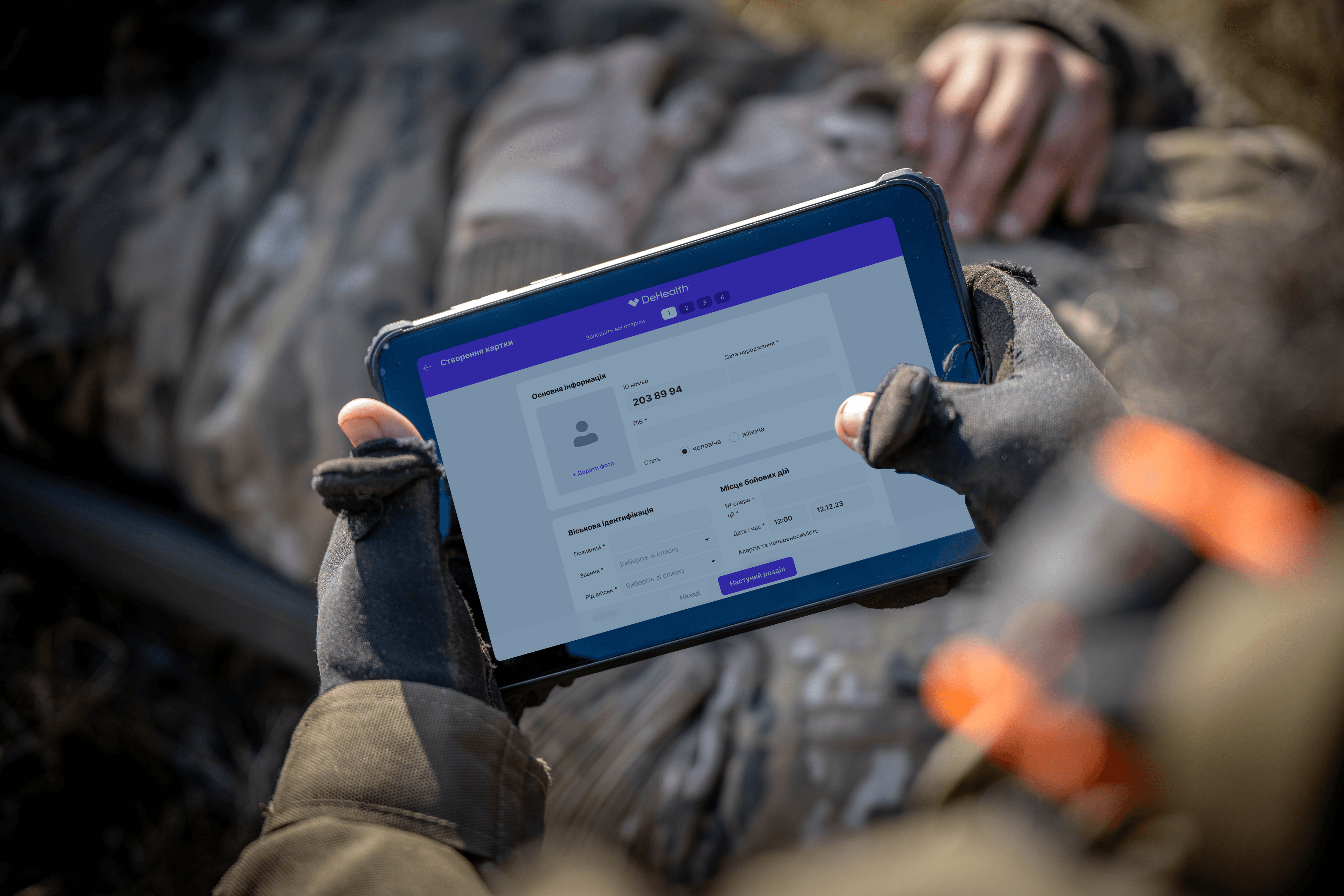
The evacuation chain.
One casualty record, handed forward intact through every echelon of care — no paper, no re-entry, no identity loss between links.
01
Point of injury
Combat medic
02
Medical aid station
Medical Team №1 · Medical Team №2
Oversight · Medical Team supervisor
03
Stabilization point
On-call physician
Oversight · Stabilization-point supervisor
04
Military / civilian hospital
Receiving clinician
Speed saves lives.
2× faster: the digital card fills twice as fast as paper. Paper is slow. Digital saves lives.
On the digital interface, auto-fill suggests the medication name and dosage from the patient's prior history. The paper version requires hand-writing every field from scratch under stress.
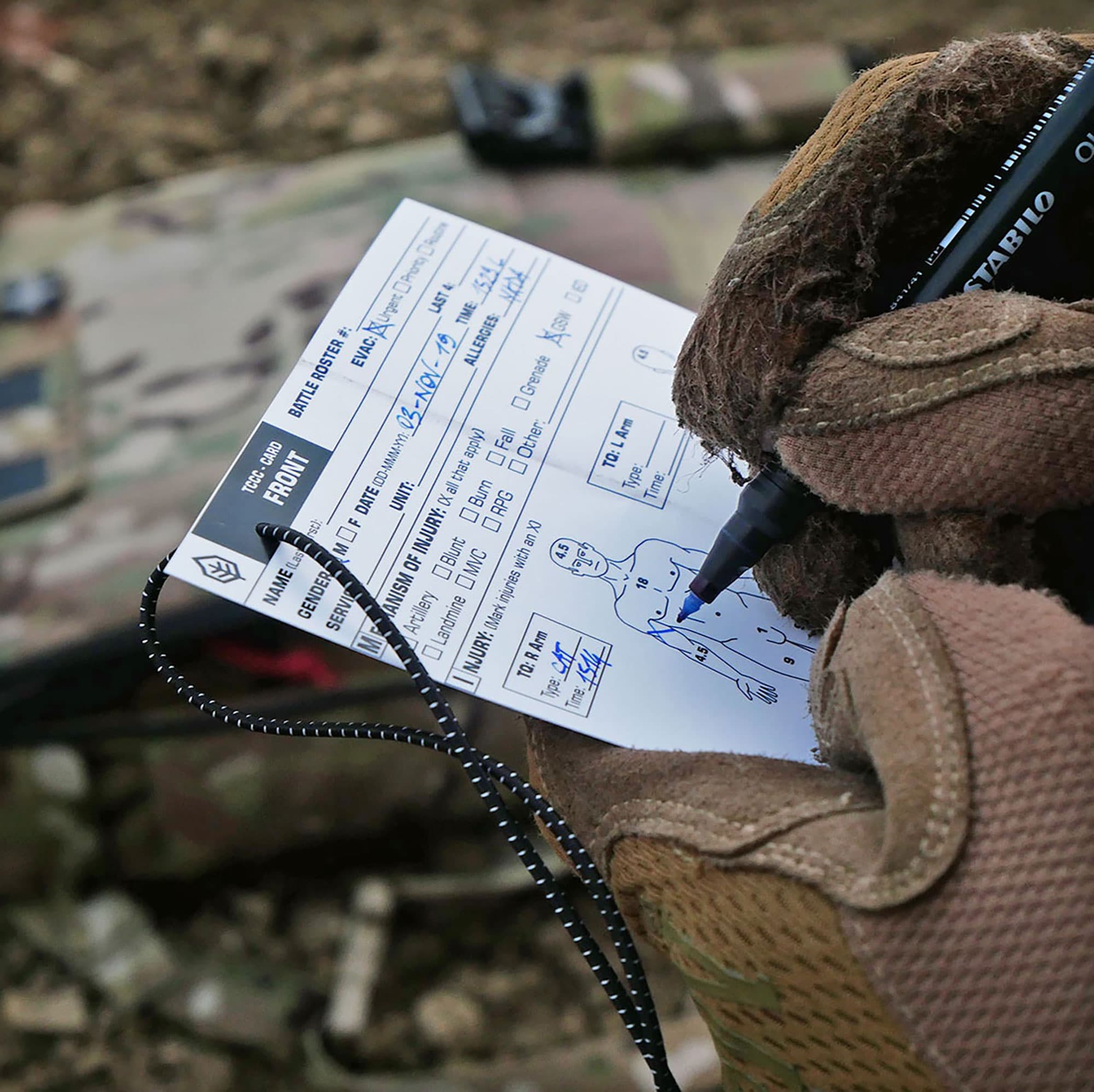
Before
15:00
By hand — paper TCCC
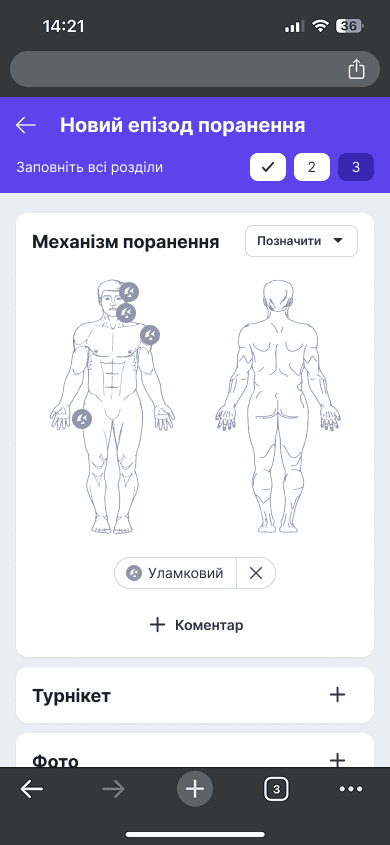
After
7:00
On AI — AHS-UA1
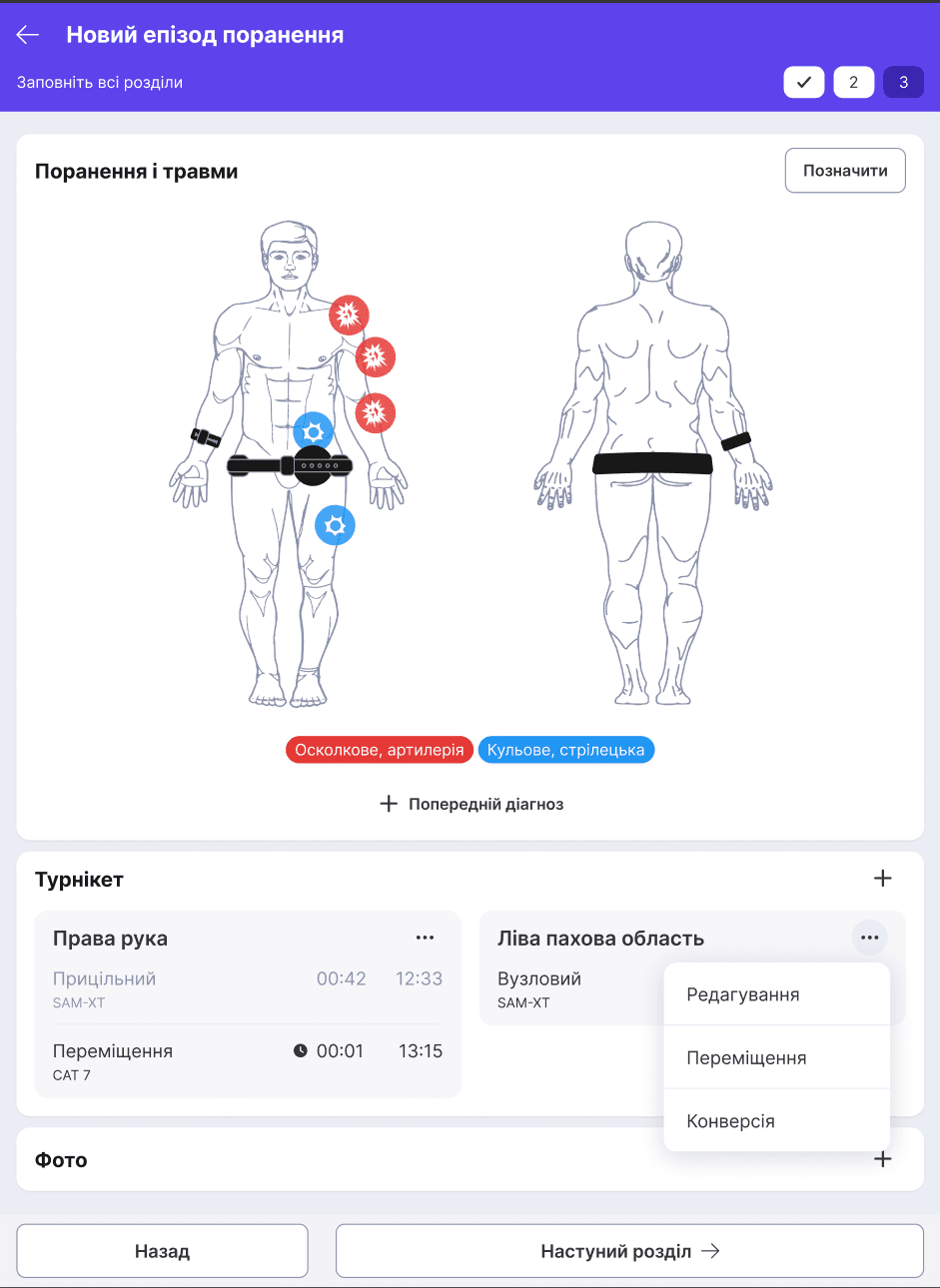
From paper to digital — smart injury mapping.
Easier to record burns and an expanded injury classification.
The legacy paper system doesn't account for critically important injury categories. The AHS-UA1 body-diagram interface closes those blind spots — real time, smart analysis.
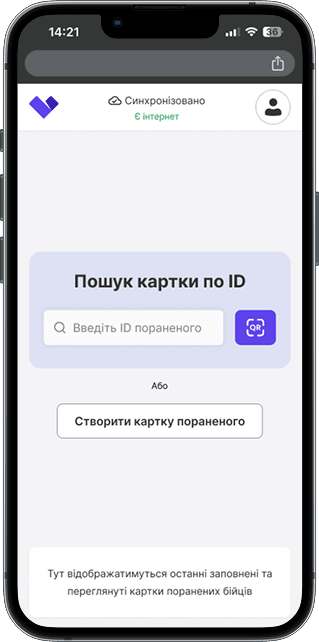
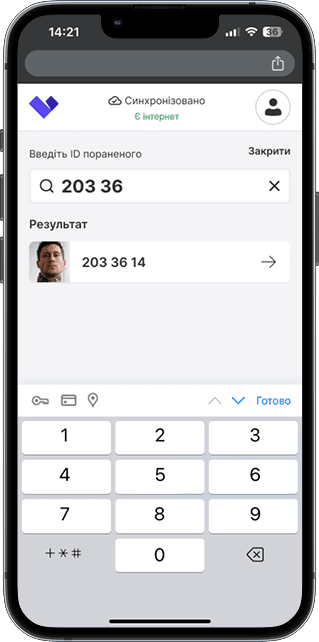
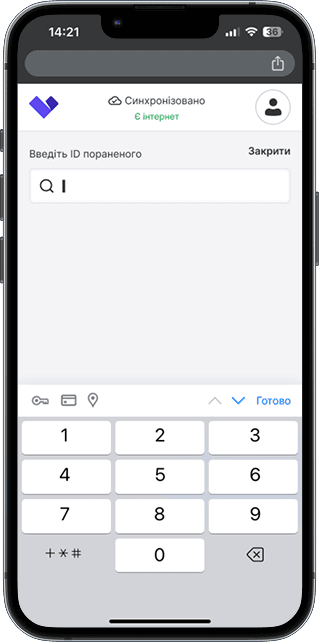
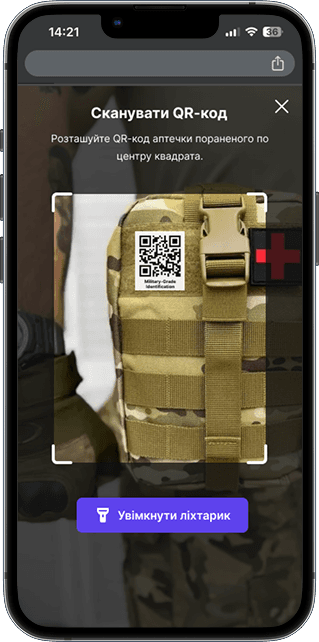
Instant identification of the wounded — ID or QR scan.
01
Enter the wounded soldier's ID.
02
Or enter a unique number to find the record.
03
Select the card that matches the entered ID.
04
Or scan the QR code from the soldier's first-aid kit for instant identification.
Main sections of the card.
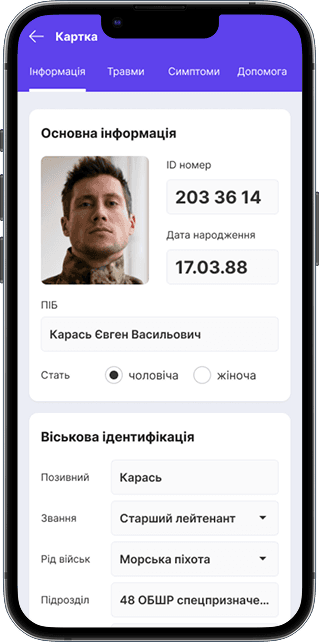
Personal information
profile photo, ID, birthdate, name, rank, role.
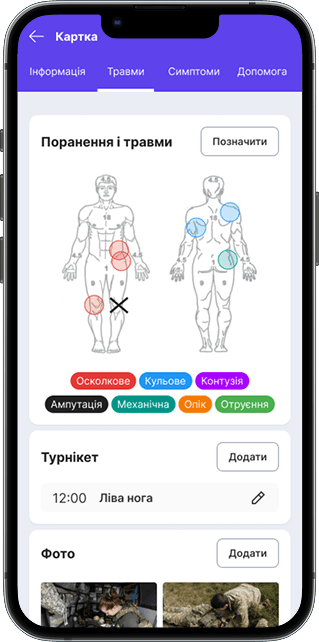
Wounds and injuries
body diagram, color-coded markers, tourniquet log.
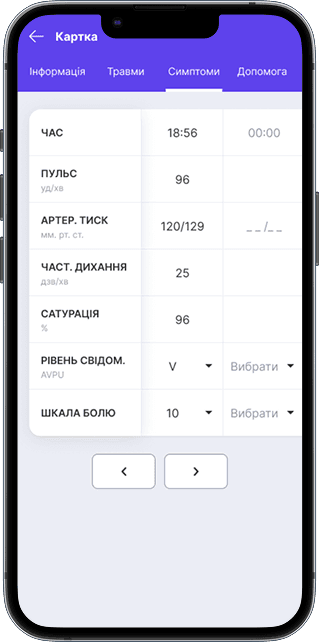
Vital signs and symptoms
BP, heart rate, respiratory rate, saturation, level of consciousness, pain scale.
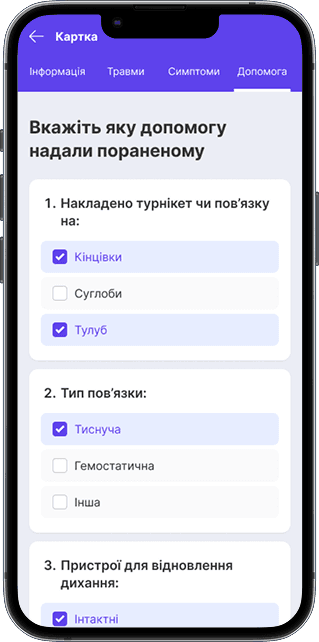
Medical assistance provided
checklist of interventions administered.
Military-grade security and standards compliance.
Global data architecture
- Primary hosting in Tier 3+ data centers in Ukraine, full compliance with military requirements.
- Backup in Europe — critical data duplicated in highly-protected European storage for emergency recovery.
- Protection from DDoS and cyberattacks — AI anomaly detection, attempt interception, proactive security protocols.
- Role-scoped access with non-sequential record IDs — even administrators cannot read clinician-created medical records, and cards can't be enumerated by URL.
- Full change history on every card, automatic geolocation stripping from photos, and access auditing that flags and blocks suspicious activity.
- Connectivity-resilient: works fully offline with minimal local storage, auto-syncing once a connection returns. Interoperates with existing medical information systems (MIS) across the chain of care.
01
Certified cloud infrastructure
Data stored in encrypted environments certified to ISO 27001, including nodes free of Russian-origin systems.
02
End-to-end encryption
AES-256 for data at rest and in transit. Full compliance with military and medical standards.
03
Multi-factor authentication
Role-based access control (RBAC), biometric verification, encrypted VPN tunnels.
Compliance certifications
Patient data resides in infrastructure certified to international and Ukrainian state-grade information-security standards.
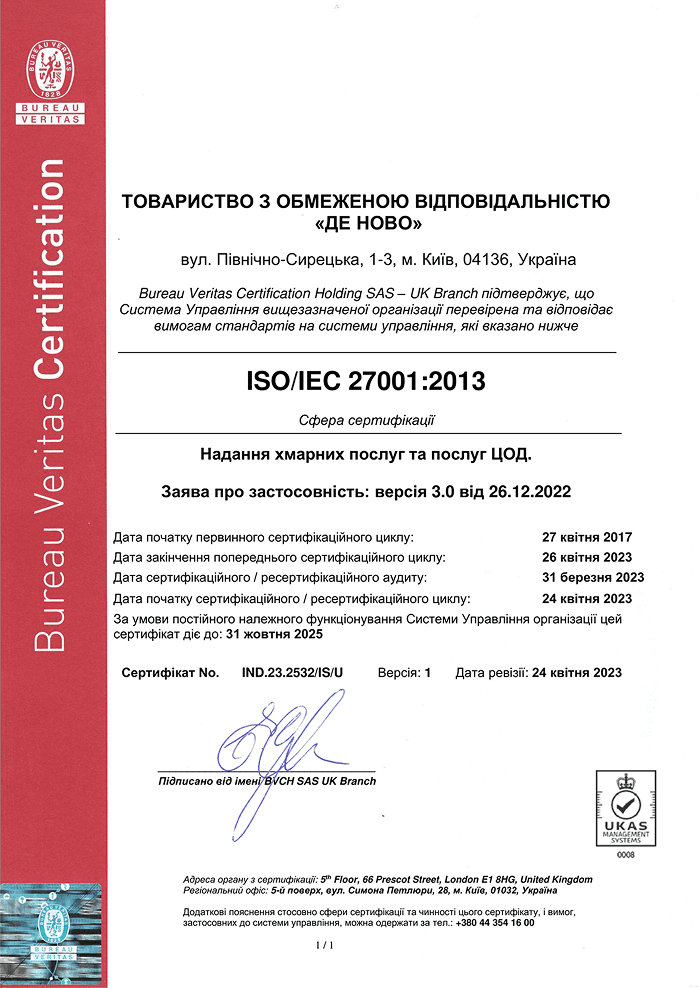
ISO/IEC 27001:2023
Information security management
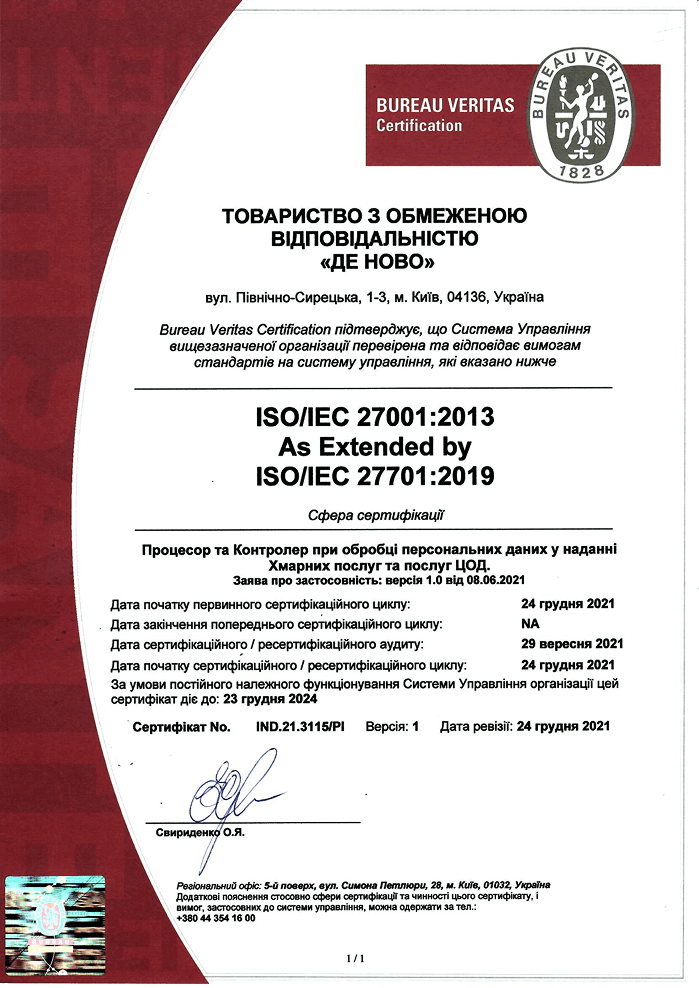
ISO/IEC 27701:2021
Privacy information management
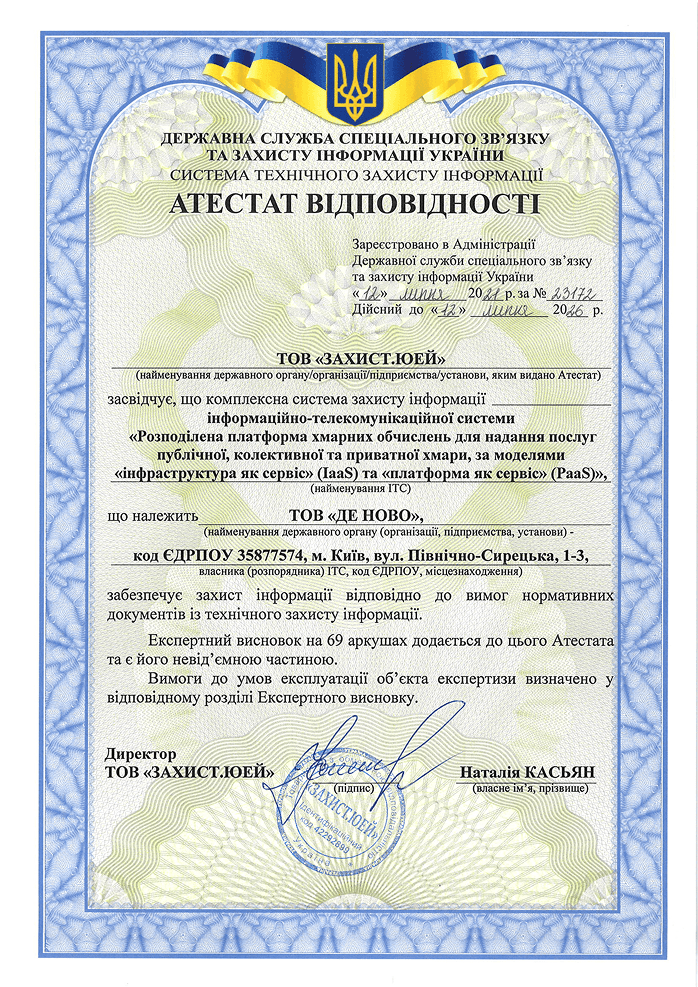
KSZI · Hosting (2021)
Ukrainian state-grade protection · hosting
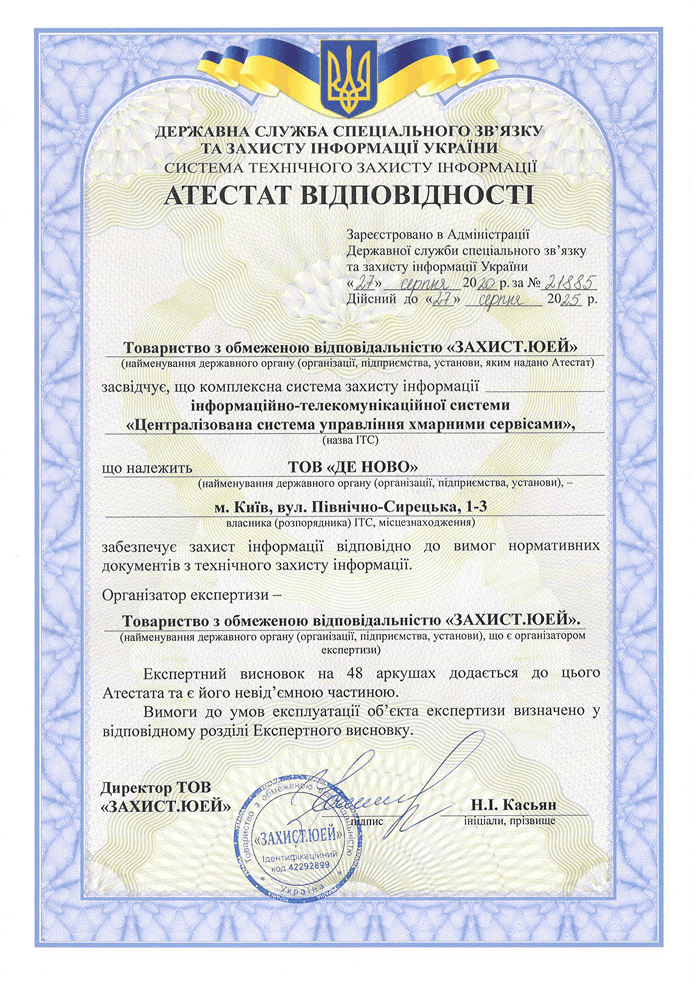
KSZI · Cloud management (2020)
Ukrainian state-grade protection · cloud
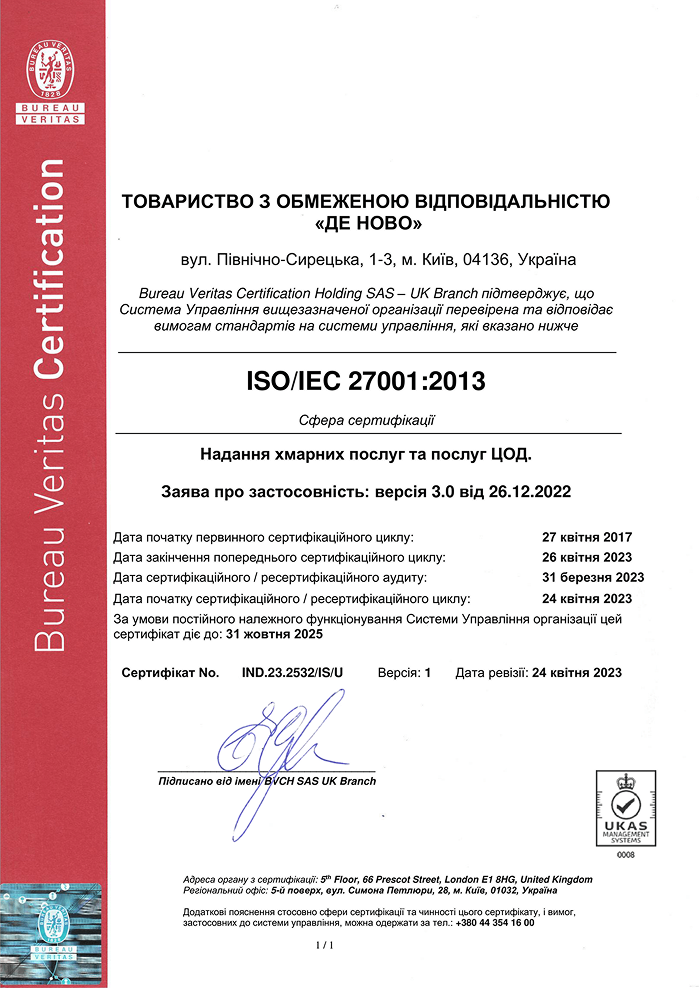
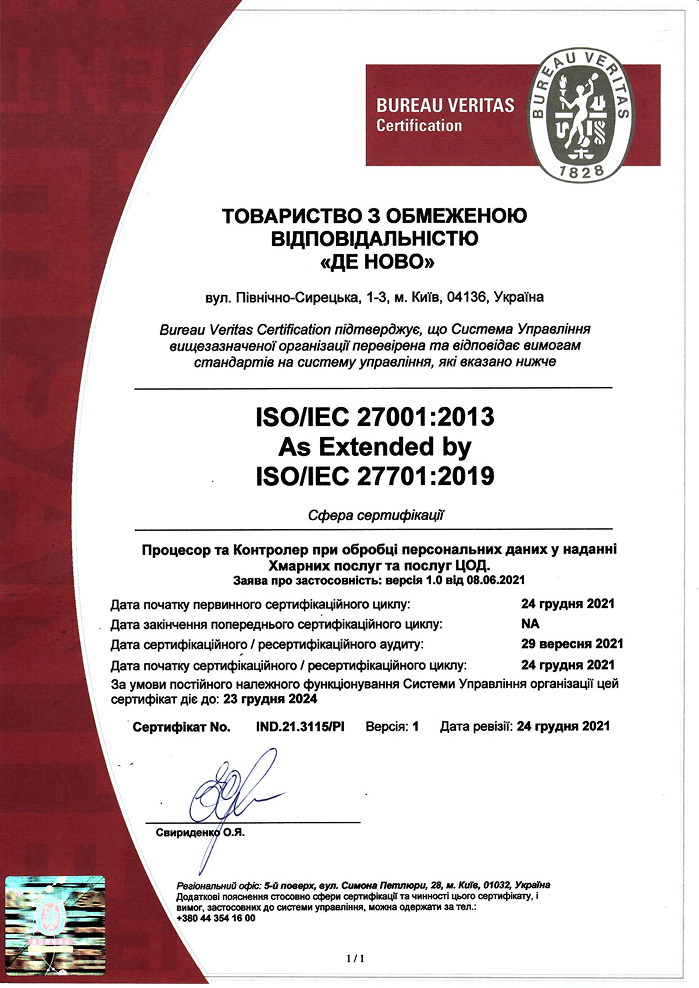
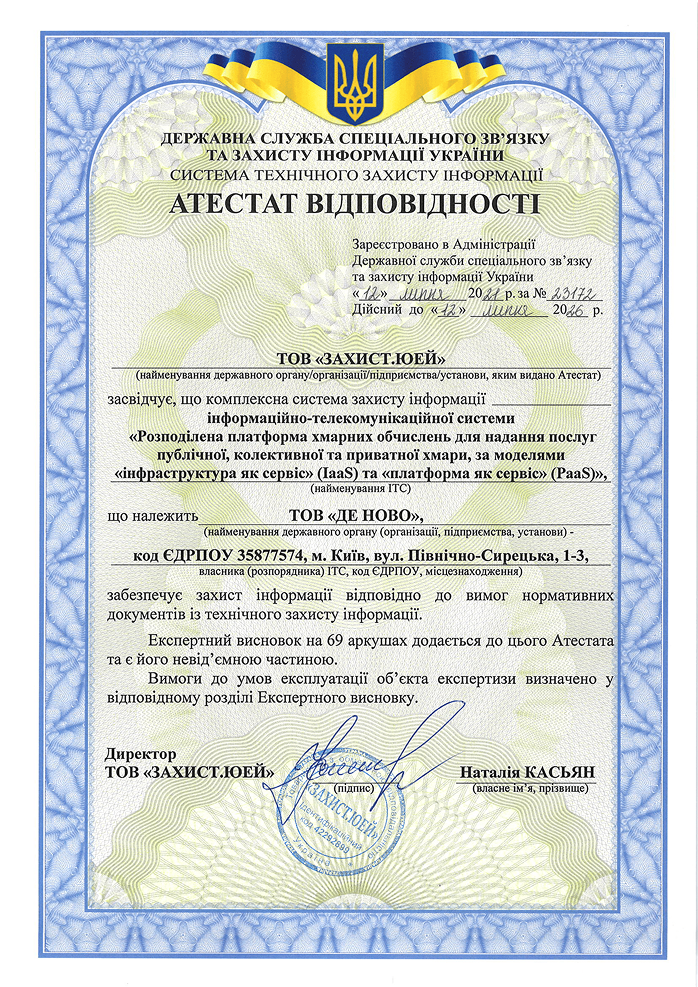
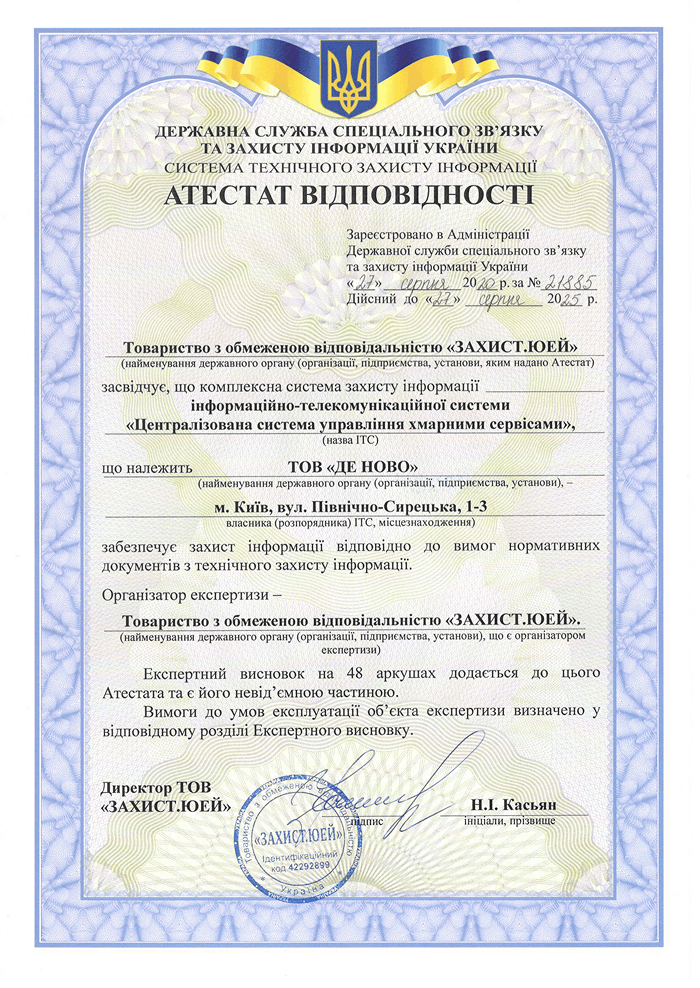
Certificates issued to our hosting partner DeNovo. Click to view.
Security — not an option. A critical mission.
Talk to us.